






What Happens at a Stalking Protective Order Hearing in Oregon?
Nov 18, 2026 Stalking Protective OrdersFacing a Stalking Protective Order in Oregon: What the Hearing Decides
Key Takeaways: At an Oregon stalking protective order hearing, a judge decides whether to dismiss the temporary order, postpone the hearing for up to 30 days, or enter a final SPO that can last indefinitely. The judge can enter a final order whether or not you show up. A judge grants a temporary SPO without hearing from you, based only on probable cause. It is not a finding that stalking happened, but you must follow it exactly until the court changes it. Under ORS 30.866, the petitioner must prove by a preponderance of the evidence: repeated, unwanted contact that alarmed or coerced the petitioner, that a reasonable person in the petitioner’s situation would have been alarmed or coerced, and that the contact caused reasonable fear for personal safety. At a contested hearing, both sides can generally present evidence, cross-examine witnesses, and testify. The stakes can include money damages, attorney fees, and effects on jobs, housing, gun rights, and parenting. Not showing up can lead to a final order or an arrest warrant. Respondents who keep every record, show the full context of each contact, and prepare a focused defense may improve their chances of a fair outcome.
A stalking protective order hearing in Oregon is where a judge decides whether a temporary order against you ends or becomes a final order with no end date. It is often the first time the petitioner’s claims are tested in open court. Under ORS 30.866(3), the court can postpone the hearing for up to 30 days or enter a final stalking protective order (SPO), whether or not you appear. If the petitioner does not prove the claim, the court should not enter a final order. This article explains the hearing from the respondent’s side: what the petitioner must prove, how the hearing generally works, and which choices matter most before your court date.
If you have been served with a temporary SPO and a hearing date, the Law Office of Mike Arnold can review your case before that date. To begin, request an intake call or call 541-359-4585. Please share only your contact and conflict-check information until we complete a conflict check.

How a Temporary SPO Leads to a Court Hearing
Most respondents first learn about the case when they are served with papers. Under ORS 30.866(2), the court enters a temporary SPO if it finds probable cause based on the petition. The judge decides ex parte, without you there. Probable cause is a low bar, and the temporary order does not mean a judge has found that stalking happened.
The temporary order can bar any type of contact listed in ORS 163.730. The definitions in Oregon’s stalking statutes cover many kinds of contact, including approaching someone, sending messages, and contacting third parties. You must be personally served with the petition, the temporary order, and an order to appear in person and show cause why the temporary order should not continue indefinitely. That show-cause order is why the court sets a hearing.
Compliance Comes First
Until the court changes the temporary order, you must follow it exactly, even if you believe the claims are false. Violating an SPO is a crime under ORS 163.750. It is generally a Class A misdemeanor, and prosecutors can charge it as a felony in some cases, such as when you have a prior conviction. Contacting the petitioner "only to explain" can become new evidence against you. Any contact should go through your lawyer or the court.
💡 Pro Tip: Do not delete texts, social media posts, call logs, or emails, even ones that seem to hurt you. Deleting them can look like hiding evidence, and full message threads often show context that the petitioner’s chosen screenshots leave out.
What the Petitioner Must Prove Under ORS 30.866
The petitioner carries the burden of proof, and the elements set the limits of your defense. Under ORS 30.866(1)(a)-(c), the petitioner must prove all of the following:
- You intentionally, knowingly, or recklessly made repeated and unwanted contact with the petitioner or a member of their immediate family or household, and that contact alarmed or coerced the petitioner.
- A reasonable person in the petitioner’s situation would have been alarmed or coerced.
- The contact caused the petitioner reasonable fear for their own safety or the safety of a family or household member.
The petitioner’s case can fail on any one element. Under ORS 163.730, "repeated" means two or more times. Whether each contact was truly unwanted, how the petitioner understood it, and whether any fear was reasonable often depend on context. A judge may view a message sent while sharing parenting duties very differently from contact made after a clear request to stop. Contacts made only through speech or writing face constitutional limits. Under Oregon cases such as State v. Rangel, those contacts generally must be a clear threat that would cause reasonable fear of immediate and serious violence, and the threat must be likely to be carried out.
The Burden of Proof Is Lower Than in Criminal Court
Under ORS 30.866(7), the petitioner must prove the claim by a preponderance of the evidence. That means more likely true than not, a much lower standard than proof beyond a reasonable doubt. Respondents who assume the judge will need overwhelming proof often underprepare. A believable petitioner with organized exhibits may meet this standard, especially if the respondent does not offer a clear, evidence-based response.
Inside a Protective Order Hearing Oregon Respondents Attend
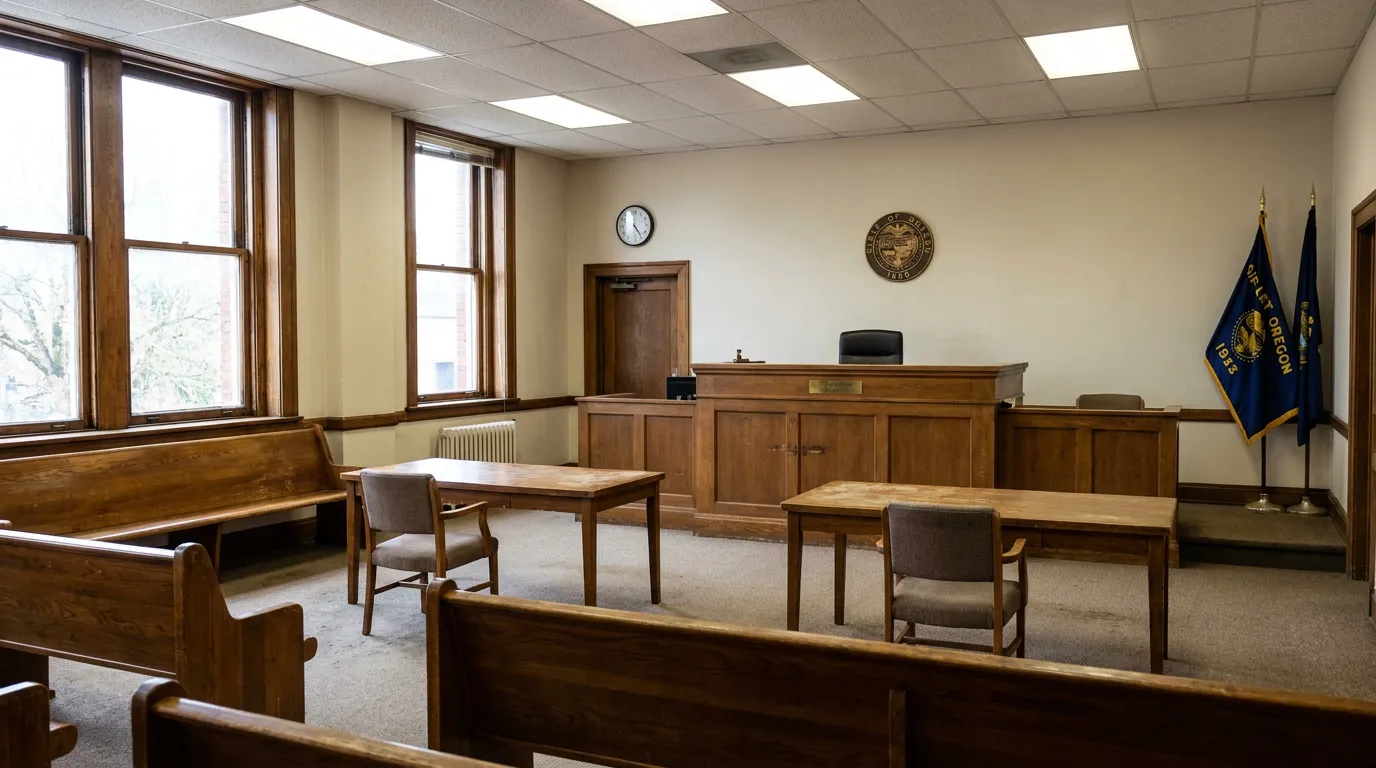
At a contested SPO hearing, both sides can generally present evidence and testimony, and the judge applies the legal standard. The petitioner usually goes first, with testimony and exhibits such as messages, photos, or witness accounts. You or your lawyer can generally cross-examine those witnesses and then present your own evidence. The judge then decides whether the petitioner has proven each element under ORS 30.866.
Hearings are often shorter than people expect. Courts schedule many SPO hearings on busy dockets, so you may have little time to tell your side. Before the hearing, find out which contacts the petitioner relies on, what proof exists for each, and which contacts you can disprove, explain, or show were lawful.
What Happens If You Do Not Appear
Not showing up is a serious mistake. Under ORS 30.866(3), the court may enter a final order without you. If you were served and do not appear, the court may also issue a warrant for your arrest. Not showing up also generally gives up your only chance at this stage to challenge the petitioner’s account.
| Hearing Issue | What Oregon Law Provides |
|---|---|
| Possible outcomes | Continuance up to 30 days or final SPO (ORS 30.866(3)); no final order if the claim is not proven |
| Burden of proof | Preponderance of the evidence (ORS 30.866(7)) |
| Respondent fails to appear | Final order possible; arrest warrant possible (ORS 30.866(3)) |
| Minor respondent | Order may be entered without a guardian ad litem (ORS 30.866(5)) |
| Court fees | No filing, service, or hearing fee (ORS 30.866(9)) |
The Stakes Go Beyond the Order Itself
An Oregon civil stalking order can expose you to money damages as well as contact limits. Under ORS 30.866(4)(a)-(c), a petitioner may recover special and general damages, including damages for emotional distress, as well as punitive damages and reasonable attorney fees and costs. The full text of ORS Chapter 30 sets out these remedies.
A final SPO can also affect jobs, housing, gun rights, and parenting plans. These effects depend on your situation and may involve federal law as well as Oregon law. Because a final order may have no end date, the hearing is often your best chance to answer the claims.
Deadlines can also matter. Under ORS 30.866(6), the petitioner must file within two years of the conduct behind the claim. Whether certain alleged contacts fall within that period can be a real issue.
💡 Pro Tip: If you are a minor, or the parent of a minor respondent, note that ORS 30.866(5) lets the court enter an order against a minor without appointing a guardian ad litem. Do not assume the court will appoint someone to protect the minor’s interests.
Building a Respondent Defense That Holds Up
A strong defense starts with finding out what is true, not with arguing. Our firm separates what the petitioner claims from what the petitioner can prove. We preserve the full record and place each alleged contact on a timeline. A stalking order court hearing attorney can review whether the alleged contacts meet the elements of ORS 30.866.
Context is often the most important evidence. Many SPO petitions come out of breakups, divorces, and custody disputes, where both people have talked back and forth for a long time. Showing the full conversation, the purpose of each contact, and any lawful reason for it can change how the judge views a single screenshot. As the hearing nears, plan your cross-examination, organize your exhibits, and prepare accurate, calm testimony.
Frequently Asked Questions
1. Can the hearing be postponed?
Yes. Under ORS 30.866(3)(a), the court can continue the hearing for up to 30 days. The temporary order generally stays in effect during that time.
2. Do I have to pay to respond to an SPO?
Generally, no court fees apply. ORS 30.866(9) bars filing, service, or hearing fees in these cases. You may still have other costs, such as attorney fees, and the court may order you to pay a winning petitioner’s fees and costs.
3. Is a temporary SPO a finding that I stalked someone?
No. The judge bases the temporary order on a probable-cause review of the petition alone. At the hearing, the petitioner must prove the claim by a preponderance of the evidence.
4. Can the petitioner seek money from me?
Possibly. ORS 30.866(4) allows recovery of special and general damages, including emotional distress damages, as well as punitive damages and attorney fees and costs.
5. What should I bring to a contested SPO hearing?
Bring full message threads, call logs, witness information, and papers that show the context of each alleged contact. Have a lawyer review this material before the hearing.
Preparing for the Hearing
The Oregon SPO hearing process moves quickly, and it can lead to an order with no end date, a damages award, or both. The petitioner must prove repeated, unwanted contact that caused reasonable alarm or coercion and reasonable fear for personal safety, but only under a civil preponderance standard. Respondents who follow the temporary order, keep every record, and prepare a focused, fact-based response help give the judge an accurate basis for a decision. For more on related issues, see our Oregon protective order insights.
If your hearing date is coming up, the Law Office of Mike Arnold can review your situation before the court decides. Request assistance online or call (541) 359-4585 to start an intake call. Please provide only your contact and conflict-check details at first.
Disclaimer: This content is for informational purposes only and is not legal advice. Every case is unique, and results may vary. Consult an attorney about your specific circumstances.
Credibility Records Referenced: None