


















Aretha Eugenio — Case Manager/Paralegal
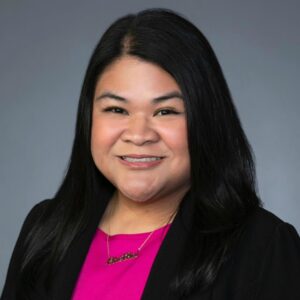
Aretha Eugenio is a licensed attorney from the Philippines, inspired early on by watching her father serve as a principled and fair judge. His example instilled in her the belief that the law is not an abstract ideal, but a daily responsibility grounded in integrity and service. While her family name opened doors, it also brought expectations that motivated her to prove herself through hard work and dedication.
Her legal experience has exposed her to complex issues such as abuse and inequality, shaping a perspective rooted in empathy and a deep understanding of the law’s impact on people’s lives. These experiences have reinforced her belief that the law can be a powerful tool when applied with intention and compassion.
Aretha has extensive experience in litigation support, court operations, and legal research across family, civil, criminal, and commercial matters. She has served within the Philippine judiciary, where she managed court administration, supervised personnel, and supported adjudication through the drafting of decisions and resolutions. She also contributed to court docket decongestion initiatives through legal research, drafting, and case management.
Aretha earned her Master of Laws in American Law Practice from the University of Denver Sturm College of Law, where she was honored with the Outstanding American Law Practice LL.M. Graduate Award.
Aretha further broadened her experience in the United States as a Litigation Legal Assistant, where she assisted in the overall case management and development.
Outside of her professional work, Aretha has a strong passion for travel. Whether embarking on long international journeys or exploring new neighborhoods closer to home, she embraces opportunities to experience different cultures—often in search of great coffee along the way. This curiosity about the world ultimately led her to pursue her studies abroad.
Today, she brings together her experiences from courtrooms, classrooms, and global travel to contribute to solutions that extend beyond individual cases. She believes that justice does not stop at borders, and that meaningful change often begins with individuals who choose to take action. She carries with her a simple guiding principle: if given the opportunity to do better, be better.